
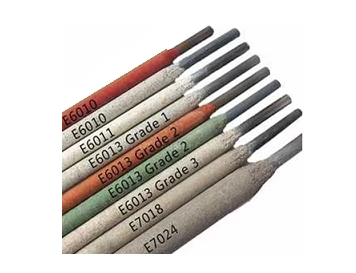
Welding rods, also known as welding electrodes, are one of the most essential consumables in any welding project. Whether you are a professional fabricator, a workshop technician, or a DIY welder, choosing the right welding rod makes a huge difference in weld strength, finish, and durability.
In this guide, we break down what welding rods are, the common types available, and how to choose the right one for your job.
What Are Welding Rods?
Welding rods are metal electrodes used in arc welding to join two or more pieces of metal. When electric current passes through the rod, it creates an arc that melts both the rod and the base metal, forming a strong joint once it cools.
Most welding rods are coated with a flux material. This coating:
- Protects the weld from contamination
- Stabilizes the welding arc
- Improves weld strength and appearance
Common Types of Welding Rods
Different welding jobs require different rods. Below are some of the most commonly used welding rods in the market:
1. E6013 Welding Rods
This is one of the most popular general-purpose welding rods.
- Easy to use
- Smooth arc and low spatter
- Suitable for mild steel
- Ideal for beginners and light fabrication work
Common uses: gates, grills, tanks, general repairs.
2. E7018 Welding Rods
Known for producing strong, high-quality welds.
- Low hydrogen electrode
- Excellent strength and crack resistance
- Requires dry storage
Common uses: structural steel, heavy machinery, pressure vessels.
3. E6011 Welding Rods
Best for tough conditions.
- Works well on rusty or dirty metal
- Can weld in all positions
- Deep penetration
Common uses: maintenance, repairs, outdoor welding.
How to Choose the Right Welding Rod
When selecting a welding rod, consider the following factors:
- Type of metal – Mild steel, stainless steel, or cast iron
- Thickness of material – Thicker metals need rods with higher penetration
- Welding position – Flat, vertical, overhead, or horizontal
- Power source – AC or DC welding machines
- Skill level – Some rods are more forgiving than others
Choosing the wrong rod can result in weak welds, excessive spatter, or cracking.
Proper Storage of Welding Rods
To maintain performance and quality:
- Store rods in a dry place
- Keep them away from moisture
- Low-hydrogen rods like E7018 should be stored in sealed containers or ovens
Moisture can cause weld defects and reduce weld strength.
Quality Welding Rods Matter
Using high-quality welding rods ensures:
- Stronger welds
- Better finish
- Reduced rework
- Improved safety
Cheap or poorly stored rods can lead to weld failure and costly repairs.
Get Reliable Welding Rods from a Trusted Supplier
At Emalumart, we stock a wide range of reliable welding rods suitable for different applications—from general fabrication to heavy-duty industrial welding. Our products are carefully selected to meet quality and performance standards trusted by professionals.
Visit our shop or contact us today for expert advice on the right welding rod for your project.

